If your organization still accepts certificates it cannot independently verify, AOG Technics is the full-cost demonstration of that policy: more than 60,000 forged documents, nearly 100 aircraft grounded, and detection only after the parts had flown. Three years after the scandal broke, the criminal case is closed but the vulnerability it exploited is not — this article lays out the verified record, a red-flag checklist you can apply to every incoming document, and the one architectural change that closes the gap for good.

The scandal in brief: a paperwork fraud, not a metal fraud

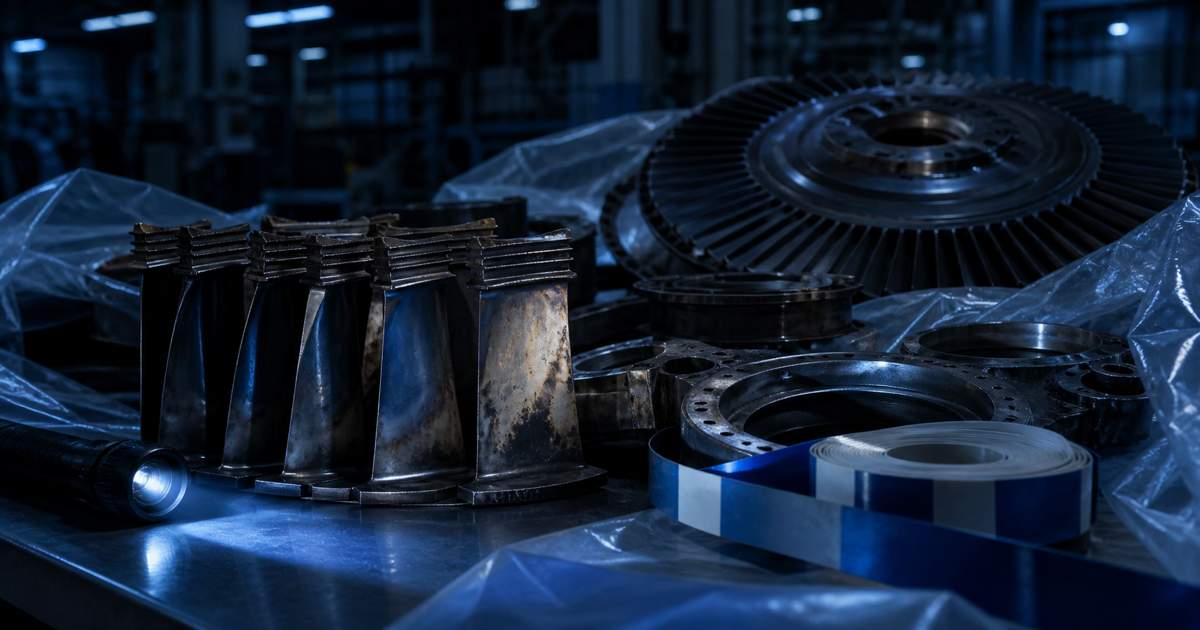
In the summer of 2023, the UK Civil Aviation Authority, the FAA and EASA issued safety alerts after unapproved engine components supplied by London-based broker AOG Technics were found in the global fleet. The FAA issued an Unapproved Parts Notification on September 21, 2023 over a bushing supplied without FAA production approval, stating that the associated documents were falsified. The parts — bolts, washers, bushings, turbine blades — were destined mostly for the CFM56, the engine that powers Boeing 737 and Airbus A320 aircraft, the two most common airliners in the world. Airlines pulled suspect components from service, grounding nearly 100 aircraft at the height of the crisis, while CFM International obtained a High Court order in London compelling AOG Technics to release its sales records and reported finding 145 engines in the global fleet fitted with AOG-linked parts.

The crucial lesson was often missed in the coverage: this was not fundamentally a counterfeit-metal problem. It was a counterfeit-documentation problem. AOG Technics sold more than 60,000 parts accompanied by forged Authorised Release Certificates (ARCs), doctoring genuine certificates and inventing fake employees to fabricate a paper trail. The parts were suspect because the documents lied — and nobody along the chain could check the documents without asking the party that had issued them.

Jan 2019 First forged ARCs enter the supply chain Jul 2023 Fraud surfaces; CAA, FAA and EASA issue safety alerts Sep 21, 2023 FAA Unapproved Parts Notification Oct-Dec 2023 SFO investigates; raid and arrest in December Dec 1, 2025 Guilty plea to fraudulent trading at Southwark Crown Court Feb 23, 2026 Sentenced to four years and eight months in prison Mar 2026 EASA warns of a new engine-parts fraud
Four and a half years elapsed between the first forged certificate and the first safety alert — and the March 2026 EASA warning shows the gap is still open.

The reckoning: guilty plea and prison sentence

The UK Serious Fraud Office opened its investigation in October 2023, raided an address and arrested a suspect that December. On December 1, 2025, AOG Technics director Jose Alejandro Zamora Yrala, 38, pleaded guilty to fraudulent trading at Southwark Crown Court. On February 23, 2026, he was sentenced to four years and eight months in prison.

The scale prosecutors established is worth restating precisely:

60,000+ parts sold with forged ARCs between Jan 2019 and Jul 2023 ~100 aircraft grounded at the height of the crisis 145 engines in the global fleet fitted with AOG-linked parts £39.3M fraud value established by the SFO
The scale prosecutors established, restated with the sources linked in this article.

The case is, in enforcement terms, a success: investigated, prosecuted, sentenced. But enforcement is retrospective. It punishes forgery after aircraft have flown — and four and a half years elapsed between the first forged certificate and the first safety alert.

What has changed: the industry builds verifiable rails

Three genuine shifts have happened since 2023.

First, the industry organized. GE Aerospace led the formation of the Aviation Supply Chain Integrity Coalition, whose founding members include Airbus, American Airlines, Boeing, Delta Air Lines, GE Aerospace, Safran, StandardAero and United Airlines, co-chaired by former NTSB chairman Robert Sumwalt and former US Transportation Deputy Secretary John Porcari. On October 9, 2024 the coalition released its report, organized around 13 recommended actions in three categories — strengthening vendor accreditation, digitizing documents and signatures, and improving part traceability. The key actions: promote suppliers accredited to FAA Advisory Circular 00-56B or an equivalent EASA/international standard; digitize the FAA Form 8130-3 and EASA Form 1 release certificates at the heart of the fraud and expand digital signatures; develop training best practices for receiving and inspecting parts; control the scrapping and destruction of non-usable material; and establish feedback channels to share suspected bad actors with supplier accreditors. The report was shared with the FAA, EASA and law enforcement, and by September 2025 the coalition was reporting implementation progress: GE Aerospace has digitized engine records back to 2015, and Boeing is piloting a digitally signed, authenticated 8130-3 with one of its largest airline customers.

Second, blockchain traceability went industrial. GA Telesis, a global independent MRO and aviation aftermarket group, announced its WILBUR provenance platform in 2024 and published a full blockchain doctrine for parts traceability on January 22, 2026 (updated July 8, 2026) — explicitly citing AOG Technics as the proof that documentation trust is the weak link.

Third, regulators kept the pressure up, with the coalition's recommendations pushing accreditation and digital signatures toward standard practice and EASA continuing to issue safety information on suspect parts.

What hasn't changed: the certificate is still the weak link

And yet. In March 2026 — weeks after the AOG Technics sentencing — EASA warned airlines and MROs of a new engine-parts fraud: 12 containers of formally non-airworthy turbofan parts, three of them containing critical or life-limited components, were fraudulently redirected from their destination in late January 2026. Different method, same lesson: wherever value moves on the strength of a document, the document will be attacked.

The uncomfortable truth is that most of the post-2023 reforms digitize the certificate without making it verifiable. A PDF ARC with a digital signature is still checked by trusting the signer, contacting the issuer, or auditing after the fact. None of these helps the receiving inspector on the tarmac who has ninety seconds to decide whether a part — or a training certificate, or a maintenance sign-off — is what it claims to be. Three years on, that verification gap is the systemic risk AOG Technics exposed and the industry has not yet closed.

And the gap is not limited to parts. Every document that qualifies a person or an organization — a mechanic's type-rating certificate, a Part-147 training attestation, a repair station's capability list — circulates today in exactly the form the forged ARCs did: an editable artifact whose integrity rests on a logo, a signature and the recipient's inability to check either. The AOG fraud chose parts because that is where the money was in 2019; nothing about the method is specific to parts. A falsified training certificate is, if anything, easier to produce and harder to catch, because no OEM traces its serial numbers.

The tool: eight red flags on incoming parts documentation

The coalition's recommendations, translated into what a receiving inspector or quality manager can actually check on Monday. Any one of these should trigger quarantine and escalation — not a phone call to the supplier that sent the document.

  1. The certificate cannot be verified without the issuer. If checking an ARC requires contacting the shop that issued it, treat the document as unverified — the issuer's contact details may themselves be fabricated, as they were in the AOG case with invented employees.
  2. The supplier is not accredited. No FAA AC 00-56B (or equivalent) accreditation, no verifiable quality system, or an accreditation that cannot be confirmed with the accreditor.
  3. Paperwork inconsistencies across the pack. Font, layout or signature variations between certificates allegedly from the same source; certificate numbers that do not sequence; dates that predate the issuing shop's own approval.
  4. The price and lead time defy the market. AOG Technics thrived during the post-2021 parts shortage by offering scarce CFM56 material quickly and cheaply. Scarcity plus speed plus discount is the fraudster's business model, not a broker's miracle.
  5. Editable artifacts as originals. A scan of a scan, a PDF whose metadata shows consumer editing tools, or a "certified true copy" offered in place of an original signed form.
  6. No digital signature where one exists. If the OEM or authority offers digitally signed 8130-3 or EASA Form 1 documents and your supplier still sends paper, ask why — the coalition's digitization push makes the paper-only supplier an outlier by choice.
  7. Untraceable teardown provenance. Used serviceable material with no documented chain from aircraft teardown to your dock, or a chain that passes through entities with no physical presence.
  8. Resistance to quarantine. A supplier that pressures you to install before verification completes, or treats a documentation query as an insult, is telling you how their paperwork is made.

This list is deliberately procedural: it needs no new software to start. Print it, hand it to your receiving inspectors, and make one red flag sufficient grounds for quarantine — the AOG case showed that forged paperwork travels with plausible parts and plausible stories, so the decision rule must survive time pressure. But every item on it is a workaround for the same root defect — the document's integrity is asserted, not provable.

The bounded case: one forged ARC through two systems

Take the simplest AOG-style play: a broker doctors a genuine ARC from a defunct repair shop, changes the serial number to match a part of unknown origin, and ships it to your MRO.

StepPaper system (2023)Anchored system
Document createdBroker edits a scanned ARC; no record of the original exists anywhere you can queryIssuer anchored the genuine certificate's SHA-256 hash on a public ledger at issuance
At receivingInspector checks layout, part number, signature visually — the forged document passesInspector scans the certificate, recomputes the hash, queries the ledger directly: no matching anchor, or an anchor bound to a different document
DetectionMonths later, if an OEM traces serials or an authority raids the brokerAt the dock, in under two minutes, before the part is shelved
Blast radiusEvery operator who bought from the broker finds out one audit at a timeThe failed verification is immediate evidence, reportable through the coalition's feedback channels
Cost to the fraudsterA laptop and a printerMust compromise an accredited issuer's signing process itself — a different crime, at a different scale

Two properties of the anchored column deserve emphasis. Verification is *permissionless*: the inspector does not call the broker, the issuer or any vendor — the ledger answers. And it is *privacy-preserving*: the chain stores only the hash, so verifying the document reveals nothing about its content, which is what makes the model compatible with GDPR and commercial confidentiality in a way that publishing documents on-chain never could be.

What anchoring does not solve

The March 2026 EASA warning is a useful discipline against overselling. Anchoring would not, by itself, have stopped 12 containers of non-airworthy parts from being stolen and redirected — that fraud attacked logistics and custody, and the forged documentation it would have needed downstream is exactly what anchoring makes detectable, but only for organizations that verify. Three structural limits remain:

  • Garbage in, garbage out. A hash anchor proves a document was not altered *after* anchoring. It cannot prove the content was true at issuance: an insider at the issuing shop can anchor a false certificate with perfect cryptographic integrity. Issuer identity, accreditation and audit remain the first line — anchoring raises the cost of forgery from a laptop to a compromised issuer, not to zero.
  • Insider fraud at the source. The trust boundary is the issuer's wallet and organization record. If those are compromised or complicit, the anchor is honest and the certificate is still false. Accreditation, multi-signature issuance and segregation of duties are the mitigations, not the ledger.
  • The adoption gap. Anchoring protects only the documents that are anchored, and only when receivers actually check. Until verification is contractually required across the supply chain — the direction the coalition's digitization track is pushing — the red-flag checklist above remains necessary, not optional.
  • The document is not the part. A verified ARC does not prove the metal in the box is the metal the certificate describes. Part marking, physical receiving inspection and teardown provenance stay mandatory; anchoring secures the paperwork layer of airworthiness, not the physical one.

Anchoring closes the silent-forgery channel AOG Technics exploited. It does not replace supplier accreditation, physical inspection of the metal, or law enforcement — it makes each of those layers checkable, and it collapses detection time from an audit cycle to a scan.

AeroCert's take

AeroCert's take: the coalition's report and the GA Telesis doctrine agree on the destination — records whose integrity is provable by anyone — and disagree only on scope. Parts provenance is getting its registry; the documents that certify *people and organizations* — training certificates, qualifications, compliance attestations across EASA, FAA and ICAO frameworks — are today exactly as forgeable as ARCs were in 2022, and they will be attacked the same way the moment their value justifies it. The lesson of AOG Technics is not "audit brokers harder"; it is that any document the industry trusts but cannot verify will eventually be forged at industrial scale.

That is the problem we build for. AeroCert anchors each issued certificate's SHA-256 hash on the Avalanche blockchain; verification is anonymous and backend-independent — scanning the QR code recomputes the hash client-side and reads the on-chain registry directly, with no account and no call to any AeroCert server, and the backend never sees clear certificate data, only hashes and encrypted payloads. AOG Technics is closed as a court case; it will only be closed as a systemic risk when every aviation certificate is independently verifiable by default. See how AeroCert works, or integrate verification into your own systems with the developer platform.