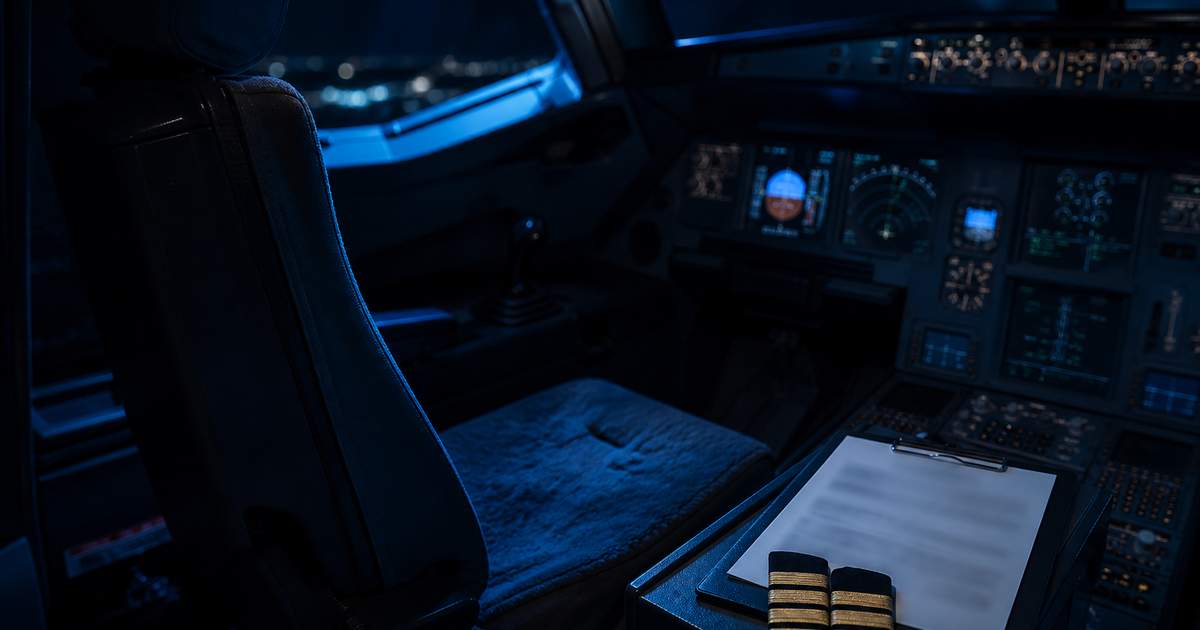
Project Icarus is the case where the forged certificate was not a parts document but the pilot's own licence. On June 1, 2026, Peel Regional Police charged a former Air Canada captain. Police allege he was assigned to more than 900 flights as captain without the Airline Transport Pilot Licence the role requires. For quality and compliance directors, the case closes a loop our parts-fraud coverage opened: the verification gap that lets forged release certificates circulate also covers the credentials of people. This article sets out the police record, the regulatory distinction at its core, a ten-point checklist for every personnel dossier you accept, and the limits of what verification can prove.

What the police record establishes

Everything in this section comes from the Peel Regional Police release PR260027841, published June 9, 2026. The charges are allegations. None has been proven in court.

  • In January 2026, Transport Canada initiated a regulatory review into the licensing credentials and conduct of a commercial airline captain. That review triggered a criminal investigation the police named Project Icarus.
  • The Fraud Bureau ran a four-month fraud and forgery investigation. Through a residential search warrant and other judicial authorizations, investigators obtained evidence indicating the accused deceived both his employer, Air Canada, and the federal regulator.
  • The accused retired from Air Canada in 2025 after a 27-year career, before either investigation began. Between 2009 and 2025, he was assigned to more than 900 domestic and international flights as a captain. He earned over $2.9 million in salary over that period.
  • Records indicate he held a Commercial Pilot Licence (CPL-A). He did not hold the Airline Transport Pilot Licence (ATPL-A) required to operate aircraft, including the Boeing 777, as captain.
  • Throughout his career he also held several positions with the Air Canada Pilots Association. These included Chair of the Master Executive Council, the union's governing body.

The salary figure deserves a second look, because it frames the legal theory. Police peg the alleged fraud at over $2.9 million earned between 2009 and 2025. The lead charge, fraud over $5,000, treats a career's worth of captain's pay as the proceeds of a document deception. For compliance teams, the message is direct: a credential failure is not an administrative irregularity. It can reframe sixteen years of payroll as alleged criminal proceeds.

On June 1, 2026, Geoffrey Wall, 59, of Barrie, Ontario, was arrested and charged. The seven counts: fraud over $5,000, two counts of uttering forged documents, three counts of possession of a counterfeit mark, and public mischief. Chief Nishan Duraiappah said the case "strikes at the heart of public trust and safety," with hundreds of thousands of passengers allegedly put at risk across more than 900 flights.

Two items of press context, dated and reported rather than established. ABC News reported on June 9, 2026 that police said the alleged fraud "read like a movie script." FlightGlobal reported on June 19, 2026 that Transport Canada will review its crew-licensing processes and urged airlines to scrutinize the authenticity and currency of crew documents.

Air Canada's own position belongs in this record. In a statement carried by the Associated Press after the arrest, the airline said safety was not compromised, because "all pilots at Air Canada undergo mandatory recurrent training every six months to validate their flying competency, including a flight check with a certified Transport Canada check-pilot every 12 months." The airline also told AP an audit of its pilots found no other instance of non-compliance. The same statement then concedes the point that matters here: "appropriate licensing is an essential layer of the airline industry's multilayered approach to safety." Read the two together. The competency layers — recurrent training, simulator checks, medicals — can all be current while the licensing layer is not. The layer that allegedly failed is the one every other layer presupposes. That distinction is the whole case.

What is not established is just as important for a compliance reader. The public record does not say how the documents passed Air Canada's internal checks between 2009 and 2025. It does not say which document was presented as an ATPL-A, or how often anyone re-examined the file. Any article that claims to answer those questions today is speculating.

2009 First captain assignments begin, per police records 2025 Retires from Air Canada after a 27-year career Jan 2026 Transport Canada review triggers Project Icarus Jun 1, 2026 Arrest; fraud and forgery charges laid Jun 9, 2026 Police release PR260027841 published Jun 19, 2026 Transport Canada crew-licensing review reported
Sixteen years elapsed between the first captain assignment and the regulatory review that exposed the gap.

The licence at the center of the case: CPL-A versus ATPL-A

Under the Canadian Aviation Regulations, a CPL-A and an ATPL-A are different privileges, not different versions of the same card. Transport Canada's licensing guidance sets out both, referencing Standard 421 of the CARs.

  • CPL-A (Standard 421.30). Category 1 medical certificate, the CPAER written examination, a defined experience requirement, and a practical flight test. It permits commercial flying. It does not permit command of an airliner.
  • ATPL-A (Standard 421.34). Category 1 medical, three written examinations (SAMRA, SARON and INRAT), a higher experience requirement, and a skill test on a multi-engine aeroplane under instrument flight rules. Per the police release, it is the licence required to operate an aircraft such as the Boeing 777 as captain.

The gap matters because the two credentials look alike to a non-specialist. Same issuing authority, similar document, different privileges. A process that checks "valid Transport Canada licence on file" without matching privileges to the role would pass a CPL holder into a captain's seat. That is the failure mode Project Icarus puts on the record.

A certificate proves what it proves, and nothing more

The same discipline already governs how we read maintenance credentials. As we noted when examining certificate proof that survives a cyberattack, an EASA Part-147 attestation proves a person completed approved training. It does not grant certification privileges. Those rest on the Part-66 licence and on the certifying-staff authorization issued by the maintenance or continuing-airworthiness organization. The EASA's Part-147 FAQ and its FAQ on Part-66 licence privileges make this separation explicit.

The same separation holds under FAA and Transport Canada frameworks. A training record proves training. A licence proves privileges granted by the authority. An employer's authorization proves the organization has scoped that person to a role. Three documents, three assertions, three different failure modes.

There is also no public serial-number registry for people-documents. As we wrote in the AOG analysis, a forged parts certificate at least risks colliding with an OEM's serial traceability. A falsified training certificate or licence copy faces no such collision backstop. An official verification channel did exist, as the next section shows — but no public registry let a third party recompute anything independently.

Project Icarus is what happens when a system blurs them. A genuine licence — the CPL-A — allegedly stood in for a privilege it does not carry: airline command. Every dossier your organization accepts contains the same category risk, whether it belongs to a pilot, a mechanic or a certifying engineer.

Why the checks failed for sixteen years

What follows is structural analysis, clearly separated from the adjudicated record. The specific failure inside Air Canada is not public. The structural weaknesses, though, are visible in the timeline itself.

  • Point-in-time verification. Credentials are checked at hiring or promotion, then filed. A document accepted in 2009 may never have been re-verified in 2015 or in 2022.
  • An official channel existed; whether it was used is not public. Transport Canada has long issued licence verification letters confirming authenticity and validity. It issues them to aviation authorities, and to any private organization holding the pilot's signed consent. The public record does not say whether anyone requested one between 2009 and 2025.
  • Trust compounding. Seniority, 27 years of service and union office all make re-verification feel redundant. Per the release, the accused chaired the ACPA's Master Executive Council. Trust is the fraudster's infrastructure.
  • Detection by review, not by routine. Detection came from a regulatory review in January 2026, not from a verification routine. The public record does not establish which checks were performed before that, at what frequency, or why they failed.

This is the same pattern we documented for parts. In the AOG Technics case, four and a half years elapsed between the first forged release certificate and the first safety alert. Enforcement worked, but retrospectively. Project Icarus stretches the same gap to sixteen years on the personnel side, against a major airline and a national regulator simultaneously.

The industry's answer on the parts side is instructive. The GA Telesis blockchain doctrine and the Aviation Supply Chain Integrity Coalition both push toward records whose integrity anyone can verify. Transport Canada has now made the personnel-side expectation explicit. CASA 2026-09, effective June 12, 2026, recommends that operators verify the validity, authenticity and currency of pilot licences at every stage. That means initial hiring, ongoing monitoring, and each licence or type-rating renewal, with new-hire credentials aligned against Transport Canada records.

Issuance Authority issues the credential Presentation Copy presented and filed Verification What is checked today Checked today Copy on file or a call to the issuer May never be independently re-verified Anchored at issuance Recompute the SHA-256 hash of the certificate Match or mismatch in minutes, without the issuer
The same document, two verification regimes: asserted integrity on the left, provable integrity on the right.

Note what that regulator response implies for operators. Transport Canada is not only reviewing its own licensing processes. CASA 2026-09 sets an explicit safety expectation for operators: scrutinize authenticity, validity and currency of crew documents, and treat any discrepancy as reportable. The oversight expectation is shifting toward the operator's intake process. A dossier-checking routine you can show an auditor is becoming a compliance asset, not a courtesy.

The tool: ten checks on any incoming personnel dossier

You are a quality director at an operator or an MRO. A personnel dossier arrives: a new hire, a contractor crew list, a subcontractor's certifying staff. Each check below is pass-or-quarantine. None requires new software to start.

  1. Verify with the issuing authority, not the employer. Use the regulator's licensing channel or registry. A phone number printed on the certificate is not verification — the AOG case showed contact details can be fabricated along with the document.
  2. Match privileges to the role, not just validity. This is the Icarus lesson: a valid licence can still be the wrong licence. Check licence class, type ratings and instrument privileges against the exact duties assigned.
  3. Check the medical separately. Category or class, expiry date, issuing examiner. The medical is a distinct document on its own validity clock.
  4. Separate training evidence from operating privileges. A training certificate proves attendance or examination. It grants no privilege. Privileges live in the licence and the organization's authorization.
  5. Demand the authorization scope. For certifying staff, require the operator-issued authorization, with scope and limitations, current at the date of the work.
  6. Confirm identity against the document. Licence number, photo identification, and the person in front of you. Forged credentials ride on borrowed or invented identities.
  7. Ask how the document verifies without the issuer. A digitally signed or hash-anchored certificate can be checked by anyone. A scan that only the issuer can confirm is an assertion, not a proof.
  8. Set re-verification triggers. Role change, type change, licence renewal, return from extended leave, and any authority alert should reopen the dossier. Hiring-day checks are how a sixteen-year gap happens.
  9. Flow the standard down to subcontractors. Your quality system is only as strong as the dossier your subcontractor accepted. Require these same checks contractually, with evidence on demand.
  10. Quarantine on one failure. Any unverifiable document grounds the dossier, not the conversation. Escalate to the authority, never to the party that presented the document.

Every item on this list is a workaround for one root defect: document integrity is asserted, not provable. The checklist manages that defect. It does not remove it.

1 Verify with the issuing authority 2 Match privileges to the role 3 Check the medical separately 4 Separate training from operating privileges 5 Demand the authorization scope 6 Confirm identity against the document 7 Verifiable without the issuer 8 Set re-verification triggers 9 Flow the standard down to subcontractors 10 Quarantine on one failure
The ten pass-or-quarantine checks for any incoming personnel dossier, restated from the list above.

The bounded case: a subcontractor's certifying-staff dossier

Take a narrow, routine case. Your MRO receives a dossier from a line-maintenance subcontractor: one engineer, one licence copy, training certificates, an authorization letter. Here is how that dossier moves through two systems.

StepPaper-based dossierDossier anchored at issuance
Licence checkCall or email the licensing authority, wait days, or trust the copyRecompute the certificate's hash and query the public ledger: match or mismatch in minutes
Training certificatesVisual check; the training organization's LMS is the only source of truthEach certificate anchored at issuance; verifiable even if the LMS is offline or gone
Authorization letterAsserted by the subcontractor; scope rarely re-checkedAnchored by the operator; scope and date provable by the receiver
Alteration detectionNone until an audit, an incident or a police reviewAny edited copy fails the hash check at first scan
What it does not solveA false certificate anchored by a complicit issuer still verifies; issuer vetting stays mandatory

Two properties deserve emphasis, because they decide whether the second column scales. Verification is permissionless: the receiving inspector asks the ledger, not the issuer or any vendor. And it is privacy-preserving by design: only hashes are anchored, so no certificate content is published in clear. Metadata, correlation and dictionary attacks against predictable payloads remain real considerations, so payload discipline still matters.

The decision rule for your own intake is simple. Keep the ten checks as the procedural layer for everything that arrives unanchored. Then, in your next supplier or subcontractor contract review, add one clause: personnel qualification documents must be verifiable independently of their issuer. That single requirement moves your dossiers from the left column to the right over time.

What verification cannot prove

The Project Icarus coverage invites overselling. Five limits keep the analysis honest.

  • The case is not adjudicated. Geoffrey Wall is charged, not convicted. Every factual claim here rests on the police release, and we have said so at each step.
  • Verification proves documents, not competence. A genuine ATPL says nothing about proficiency on a given day. Recurrent checking, line training and medicals exist for that.
  • Anchoring proves integrity after issuance, not truth at issuance. An insider at an issuing organization can anchor a false certificate with perfect cryptographic integrity. Issuer identity, accreditation and audit remain the first line of defense.
  • Registry checks depend on the registry. Authority databases have downtime and currency limits. Your checklist must define what happens when the registry is unreachable: quarantine, not assumption.
  • The adoption gap remains. Anchored verification protects organizations whose issuers anchor and whose receivers verify. Until procurement contracts require both, the ten checks above are necessary, not optional.

AeroCert's take

AeroCert's take: our parts-fraud coverage — AOG Technics, GA Telesis — kept returning to one lesson: any document the industry trusts but cannot verify will eventually be forged. Project Icarus extends that lesson to people. The fix is the same architecture: anchor each certificate's SHA-256 hash at issuance, let anyone verify it client-side against a public registry, and keep clear data off the chain entirely. A training organization can anchor its attestations. An operator can anchor its authorizations. A quality director can then verify a subcontractor's dossier in minutes, with no account and no call to the issuer.

The case also marks the limit honestly. Verification would not have made anyone a better pilot. A hash anchored at issuance detects any later alteration of the document; it proves nothing about the truth at issuance, the holder's identity, or whether anyone actually runs the check. What anchoring would have made possible — not guaranteed — is catching a forged ATPL at the first scan rather than the sixteenth year. That gap is the entire argument. See how AeroCert works, or integrate verification into your own systems with the developer platform.

Sources

Primary sources:

Press context (context, not primary evidence):

  • ABC News, June 9, 2026 and FlightGlobal, June 19, 2026: press coverage of the arrest and of Transport Canada's crew-licensing review; reported, not adjudicated.
  • Associated Press, June 2026: Air Canada's statement — safety not compromised thanks to six-month recurrent training and annual Transport Canada flight checks, no other non-compliance found in its audit, while appropriate licensing remains an essential layer of aviation safety; the airline's position, reported.